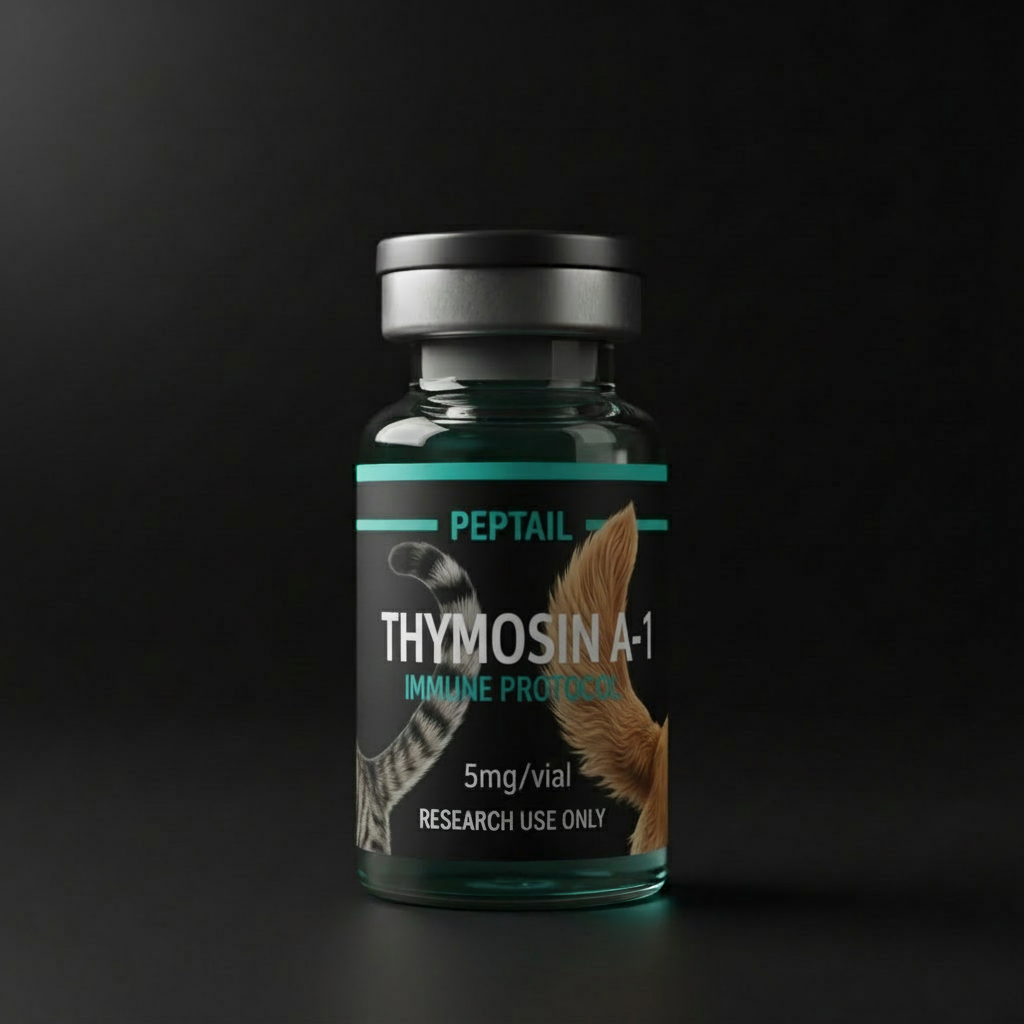
Thymosin Alpha-1 is a naturally occurring peptide produced by the thymus gland that declines dramatically with age as the thymus atrophies. It is the primary regulator of T-cell maturation and has been approved as a pharmaceutical agent for immune restoration in over 35 countries. For aging animals, it represents the most direct intervention for declining immune surveillance.
Shop Now View Dosing GuideThymosin Alpha-1 activates dendritic cells and T-cell maturation via Toll-like receptor signaling. It drives differentiation of naive T-cells into functional effector cells, restoring the adaptive immune response that declines with thymic atrophy. This is the mechanism behind its use in chronic viral infections and immune-compromised patients.
Simultaneously, Thymosin Alpha-1 enhances Natural Killer (NK) cell number and cytotoxic activity. NK cells are the immune system's first-line surveillance mechanism against cancer cells and viral infections. As GH and thymic output decline with age, NK cell populations shrink and their killing efficiency drops — this is one of the primary reasons cancer incidence increases with age.
Thymosin Alpha-1 also increases interferon-gamma production, amplifying the TH1 immune response responsible for antiviral and anti-tumor immunity, while maintaining TH2 balance to prevent autoimmune overactivation.
| Weight | Species | Dose | Frequency | Administration |
|---|---|---|---|---|
| Under 20 lbs | Dog / Cat | 50 mcg/kg | Twice weekly | Subcutaneous |
| 20–50 lbs | Dog | 100 mcg/kg | Twice weekly | Subcutaneous |
| 50–100 lbs | Dog | 100 mcg/kg | Twice weekly | Subcutaneous |
| Over 100 lbs | Dog | 100–150 mcg/kg | Twice weekly | Subcutaneous |
| Under 10 lbs | Cat | 50 mcg/kg | Twice weekly | Subcutaneous |