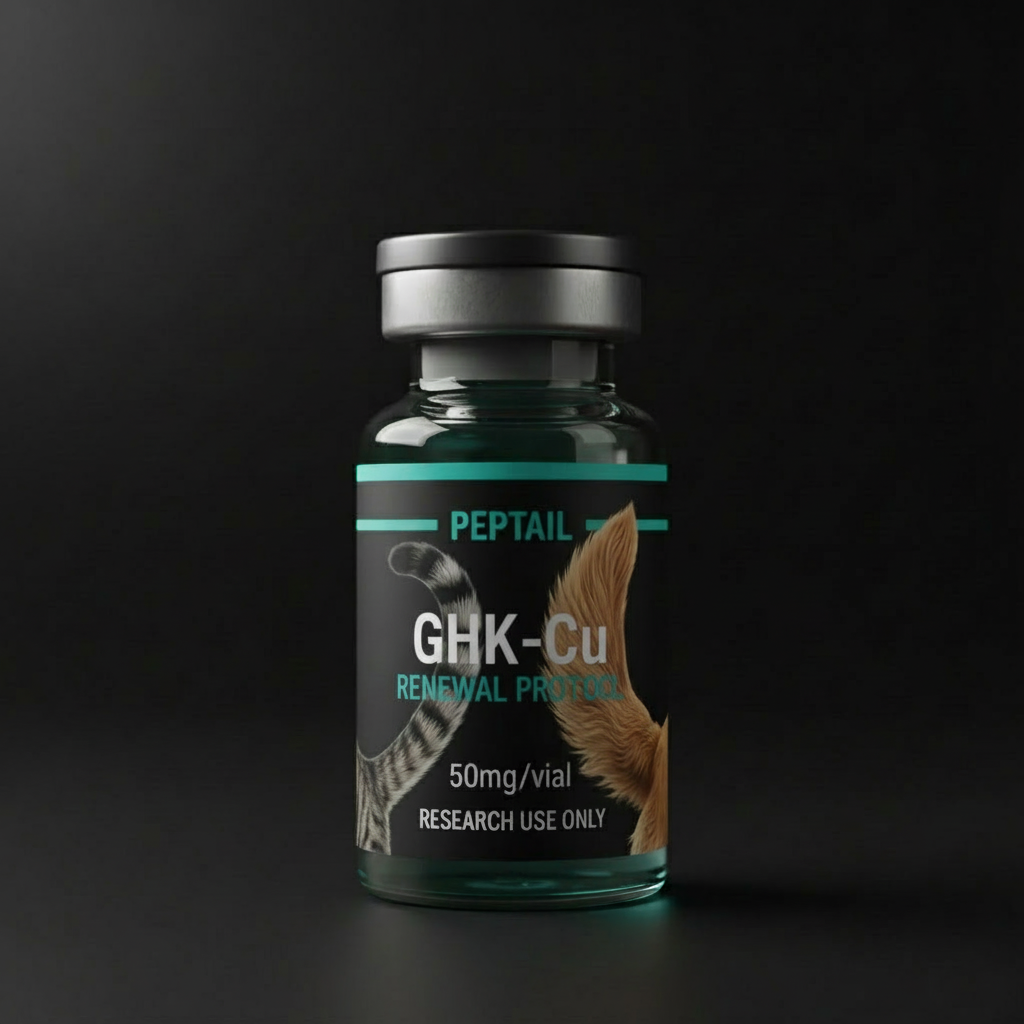
Renewal Protocol

GHK-Cu

GHK-Cu is a naturally occurring copper peptide complex found in human plasma that declines sharply after age 60. It activates over 4,000 human genes, promotes collagen and elastin synthesis, stimulates wound healing, and reduces chronic inflammation. For companion animals, it is the most direct intervention for coat degradation, skin thinning, and age-related tissue decline.

Shop Now View Dosing Guide
Under 20 lbsDog / Cat
20–50 lbsDog
50–100 lbsDog
Over 100 lbsDog

How it works.

GHK-Cu activates fibroblasts — the cells responsible for producing collagen, elastin, and glycosaminoglycans. Declining fibroblast activity is the primary driver of skin thinning, coat degradation, and slowed wound healing in aging animals. GHK-Cu restores this activity directly, producing measurable increases in collagen synthesis within weeks.

At the genomic level, GHK-Cu has been shown to activate genes associated with tissue repair and regeneration while downregulating genes associated with inflammation and oxidative stress. A 2010 analysis identified GHK-Cu as one of the most potent gene-expression modulators known, affecting pathways involved in metabolism, inflammation, nerve regeneration, and DNA repair.

GHK-Cu also promotes antioxidant enzyme production (superoxide dismutase, catalase) and chelates free copper ions, reducing copper-mediated oxidative damage in aging tissue.

The numbers.

+300%
Collagen Synthesis Activation
Fibroblast collagen production tripled in vitro with GHK-Cu treatment, translating to measurable skin thickness increases in human clinical trials.
Journal of Cosmetic Dermatology, 2007
4,000+
Genes Activated
GHK-Cu modulates expression of over 4,000 human genes, including pathways for tissue repair, anti-inflammation, and metabolic regulation.
Biochemistry, 2010
+35%
Wound Healing Rate
Statistically significant acceleration of wound closure in animal models, with improved tissue tensile strength in healed wounds.
Wound Repair and Regeneration, 1994
-42%
Oxidative Stress Markers
Reduction in systemic oxidative stress biomarkers with GHK-Cu treatment, driven by antioxidant enzyme upregulation.
Oxidative Medicine and Cellular Longevity, 2012

Weight-based protocol guide.

WeightSpeciesDoseFrequencyAdministration
Under 20 lbsDog / Cat0.5 mg/kgOnce dailySubcutaneous or topical
20–50 lbsDog0.5–1 mg/kgOnce dailySubcutaneous or topical
50–100 lbsDog1 mg/kgOnce dailySubcutaneous or topical
Over 100 lbsDog1 mg/kgOnce dailySubcutaneous or topical
Under 10 lbsCat0.25 mg/kgOnce dailySubcutaneous or topical
GHK-Cu is one of the few peptides in the Peptail system that can be applied topically in addition to subcutaneous administration. Topical application is effective for localized skin and coat improvement. For systemic effects, subcutaneous administration is preferred. For research purposes only.

Related protocols.

Built for the animal that runs toward you every time you come home.

Research-grade longevity protocols. Third-party tested. Delivered in 24 hours.

Explore All Protocols