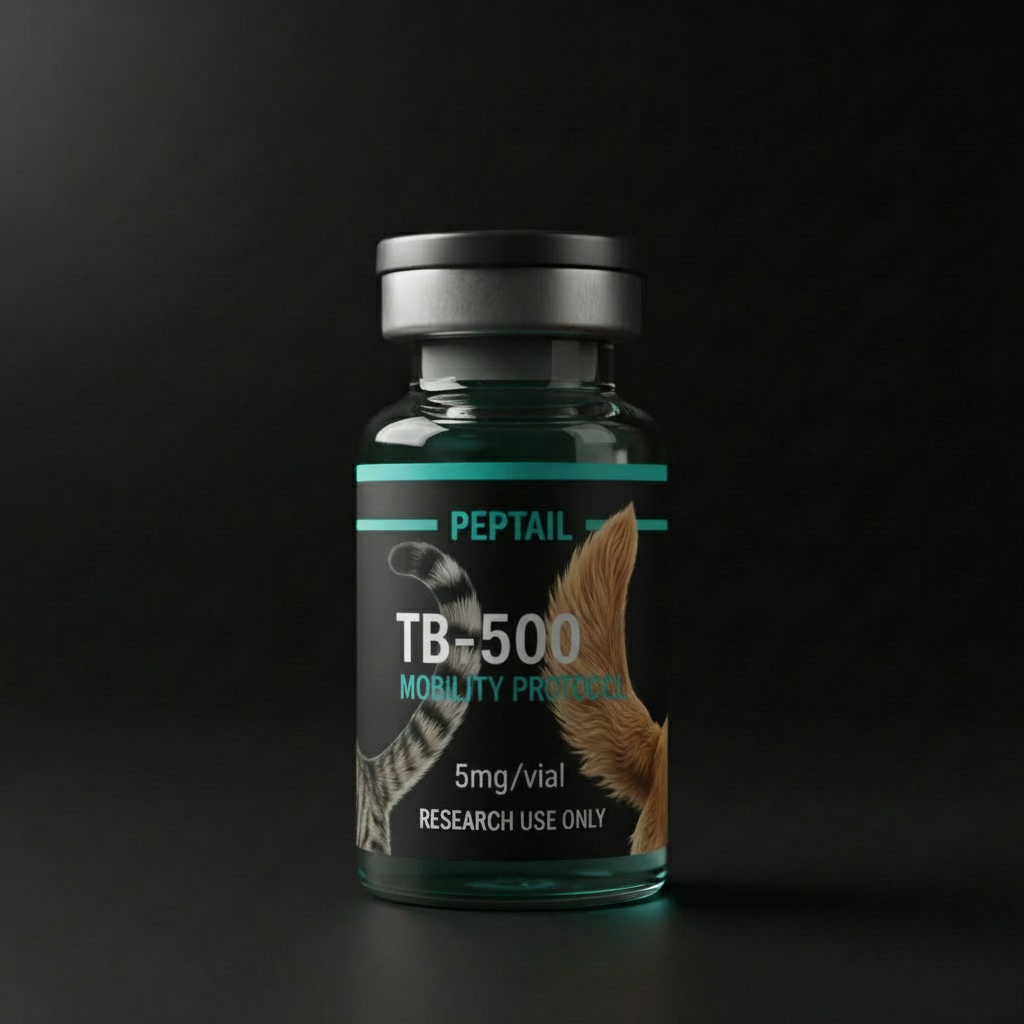
Thymosin Beta-4 is a ubiquitous protein present in virtually every cell of the body that regulates actin, the structural protein forming the cellular cytoskeleton. TB-500 has been a standard protocol in equine sports medicine for over a decade and is now increasingly studied in canine and feline applications for mobility, injury recovery, and cardiac protection.
Shop Now View Dosing GuideTB-500 works primarily through actin regulation. Actin polymerization and depolymerization is essential for cell migration, wound healing, and tissue repair. By binding to G-actin and sequestering it, TB-500 promotes the migration of endothelial cells, keratinocytes, and repair cells to sites of injury — accelerating the natural healing cascade.
TB-500 upregulates anti-inflammatory pathways and reduces systemic markers of inflammation. It promotes angiogenesis through VEGF-independent mechanisms, creating new blood supply to injured tissue without the hormonal side effects of growth factor therapies.
Additionally, TB-500 has documented cardioprotective effects — it has been shown to promote cardiomyocyte survival after ischemic events and support regeneration of cardiac tissue, making it uniquely valuable for older animals with cardiac risk factors.
| Weight | Species | Dose | Frequency | Administration |
|---|---|---|---|---|
| Under 20 lbs | Dog / Cat | 0.5 mg | Twice weekly | Subcutaneous |
| 20–50 lbs | Dog | 1 mg | Twice weekly | Subcutaneous |
| 50–100 lbs | Dog | 1.5–2 mg | Twice weekly | Subcutaneous |
| Over 100 lbs | Dog | 2–2.5 mg | Twice weekly | Subcutaneous |
| Under 10 lbs | Cat | 0.25 mg | Twice weekly | Subcutaneous |